


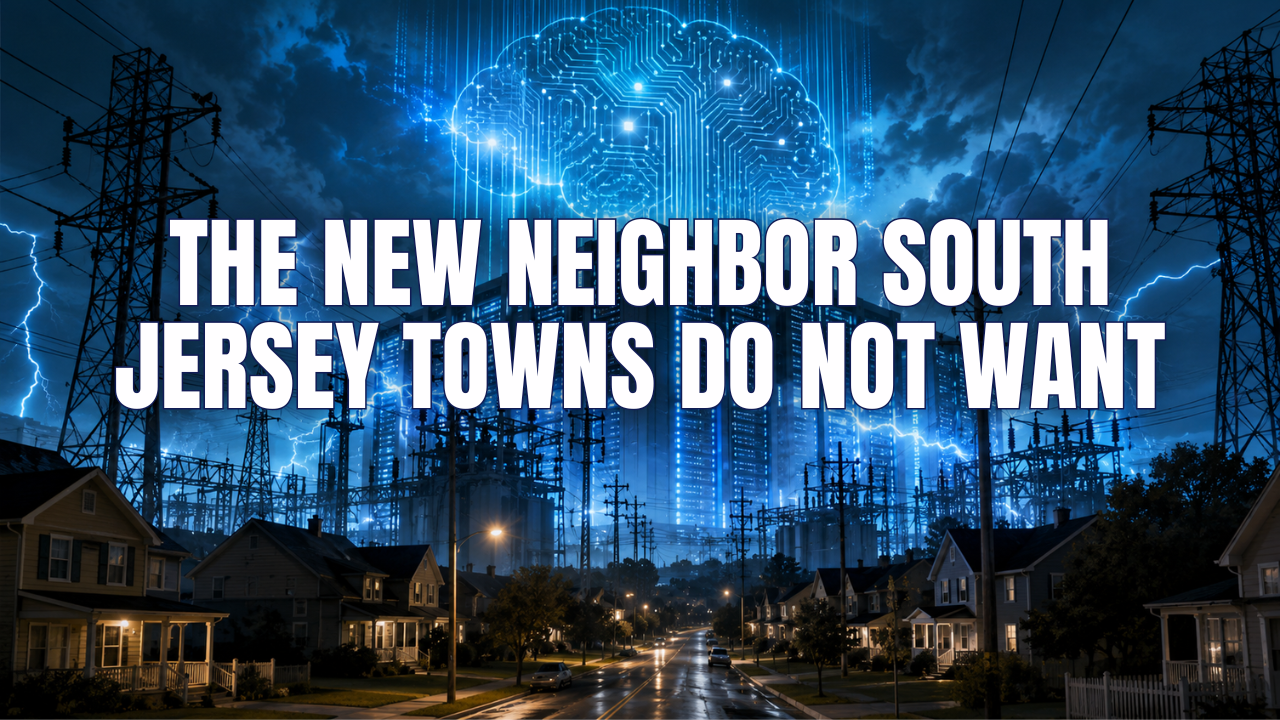
Artificial intelligence may feel invisible when we use it on our phones and computers, but the technology requires something very real: enormous data centers filled with computer servers, cooling equipment, electrical systems and backup generators.
As artificial intelligence grows, companies need more places to store information and operate the powerful computer systems behind AI tools, cloud storage, streaming services and online searches.
Now, many South Jersey municipalities are making it clear that these massive facilities are not welcome.
Cherry Hill recently joined a growing list of communities in Burlington, Camden and Gloucester Counties that have passed ordinances prohibiting large data centers. The issue has quickly become one of the hottest land use debates in New Jersey.
What Is an AI Data Center?
A data center is a building that houses computer servers and other equipment used to store, manage and process digital information.
A small server room inside a hospital, bank or local business is not what has South Jersey residents concerned. The controversy centers on large data centers that can occupy hundreds of thousands or even millions of square feet.
These facilities may operate 24 hours a day and require extensive electrical equipment, cooling systems, generators, security systems and other infrastructure.
Which South Jersey Towns Have Banned Data Centers?
The number of South Jersey municipalities taking action has grown quickly. The following is not necessarily a complete list because local ordinances and development applications can change. This information is current as of July 30, 2026.
Burlington County
Burlington Township
Burlington Township adopted Ordinance 2026 OR 012 on June 9, 2026. The ordinance added data centers to the list of prohibited uses throughout the township. Officials cited concerns involving electricity consumption, noise, air quality, water usage, community character and municipal planning.
Medford Township
Medford Township unanimously adopted an ordinance in June prohibiting large data centers within the township. Officials acted before receiving a formal application, describing the decision as a proactive step.
Mansfield and Chesterfield Townships
Mansfield Township and Chesterfield Township also approved bans in July. These decisions are part of a broader movement among Burlington County municipalities to address data centers before developers submit formal applications.
Camden County
Cherry Hill Township
On July 27, 2026, Cherry Hill Township Council unanimously passed an ordinance making large data centers a prohibited land use.
The ordinance does not prevent an ordinary business from operating a small server room. It is designed to prohibit large facilities primarily used for artificial intelligence, cloud computing and massive digital storage. Township officials said no data center developers had approached Cherry Hill and that they wanted to act before an application was submitted.
Waterford Township
Waterford Township adopted Ordinance 2026 12 on April 8, 2026. The ordinance prohibits data centers in every zoning district and specifically includes artificial intelligence processing facilities, cryptocurrency operations and other large digital infrastructure uses.
Waterford officials cited electrical demand, water consumption, cooling systems, environmental concerns and the township’s location within the protected New Jersey Pinelands.
Gloucester County
Mantua Township
Mantua Township unanimously adopted a township wide ban on May 11, 2026. Township officials cited heavy energy demand, infrastructure concerns, water consumption, constant noise and limited long term benefits for residents.
Monroe Township
Monroe Township, which includes Williamstown, banned data centers in April after residents raised concerns about a possible development along the Black Horse Pike.
The township is now defending its decision against a lawsuit filed by a developer that sought to build a one million square foot data center and warehouse project.
Logan Township
Logan Township adopted Ordinance 6 2026 on April 21, prohibiting data centers in every zoning district. The ordinance covers facilities used for artificial intelligence, cloud services, data storage, video streaming, cryptocurrency mining and machine learning.
East Greenwich Township
East Greenwich Township adopted Ordinance 11 2026 on May 26, prohibiting data centers in all township zoning districts. A proposed data storage facility in the Mount Royal section was later withdrawn.
Are Any South Jersey Towns Allowing AI Data Centers?
The clearest example is Vineland in Cumberland County, just outside Burlington, Camden and Gloucester Counties.
A massive artificial intelligence data center is under construction there. The project has been described as approximately 2.4 million square feet with a planned capacity of about 300 megawatts. The developer has said the facility will use specialized technology to reduce water consumption and environmental effects, but some residents continue to question the approval process, potential noise, emissions and the overall effect on their community.
Within Burlington, Camden and Gloucester Counties, the current picture is more complicated. Some smaller or specialized data facilities already exist, and Logan Township was previously associated with a proposed project known as Earth Station 76. However, Logan has since adopted an ordinance prohibiting data centers.
This is why homeowners should not rely on an old headline or social media post when evaluating a particular location. The ordinance, application and legal status should always be checked directly with the municipality.
Why Do Residents Oppose AI Data Centers?
Electricity Demand
Large data centers can consume extraordinary amounts of electricity. Lawrence Berkeley National Laboratory estimates that data centers could account for between 9.5 percent and 15.3 percent of all electricity used in the United States by 2030.
New Jersey recently enacted a law creating a separate rate structure for large data centers. The goal is to make these facilities pay for their own electricity use and the grid infrastructure needed to support them instead of shifting those expenses to families and small businesses.
For South Jersey residents already frustrated by higher electric bills, the possibility of adding an enormous new source of electricity demand is understandably concerning.
Water Consumption
Some data centers use water to cool computer equipment. The amount varies considerably depending on the facility’s size and cooling technology.
New Jersey lawmakers have passed legislation requiring data center operators to report their electricity and water usage to the Board of Public Utilities. The proposed reporting includes total energy use, peak daily water use, water sources, cooling systems and onsite power generation.
Constant Noise
Servers generate heat, which means cooling equipment must operate continuously. Residents may also be concerned about generators, transformers, substations and other mechanical equipment.
Noise may be particularly noticeable when a facility is close to a residential neighborhood or when background noise is lower at night.
Backup Generators and Air Quality
Data centers require dependable power. Many include backup generators that can operate during outages or testing.
Residents have questioned whether generator emissions and onsite power production could affect local air quality. The actual effect would depend on the facility’s equipment, fuel source, permits and operating schedule.
Land and Community Character
A large data center may resemble an enormous warehouse, but it can require much more electrical and mechanical infrastructure.
Residents often ask whether a town should use hundreds of acres for a windowless industrial facility rather than housing, open space, retail, manufacturing or another use that may create more visible community activity.
Limited Permanent Employment
Data center supporters point to construction work, tax revenue, technology investment and infrastructure improvements.
Critics respond that once construction is finished, a large automated facility may employ fewer permanent workers than another business occupying a similar amount of land. This debate is one reason communities are asking for more information before approving these projects.
Could a Data Center Affect Nearby Home Values?
There is not enough local sales data to say that a South Jersey data center will increase or decrease nearby home values by a particular percentage.
Real estate is very location specific. The distance from the facility, visibility, noise, traffic, utility infrastructure, landscaping and surrounding zoning would all matter.
From a practical real estate perspective, anything that changes a neighborhood’s appearance, noise level or perceived quality of life can influence how some buyers feel about living there. That does not automatically mean every nearby home will lose value. It means buyers and sellers should investigate the exact location rather than relying on rumors.
Why Local Development Matters When Selling Your Home
Most homeowners understandably focus on their home’s condition, updates and recent comparable sales. However, zoning changes, redevelopment plans, new apartments, warehouses, road projects and large commercial developments can also affect how a property should be positioned and marketed.
After 31 years as a South Jersey Realtor, I know that selling a home successfully involves much more than placing it online and waiting for an offer.
It requires understanding the local market, anticipating buyer concerns, presenting the property properly and negotiating carefully for the strongest possible price, terms and protections.
Thinking About Selling a South Jersey Home?
Do not wait until you are under pressure to make a decision.
If you are considering selling a home in Cherry Hill, Marlton, Mount Laurel, Voorhees, Pennsauken, Maple Shade or another community in Burlington, Camden or Gloucester County, contact me for a confidential conversation about your property.
I will help you understand:
Your home’s current market value
What buyers are paying attention to in your area
Which improvements may help your sale
How to prepare and market your home
How to negotiate for the best possible price and terms
I am Michaela L. Hartery, a South Jersey Realtor with Peze & Associates and 31 years of local real estate experience. I am a strong negotiator, an experienced problem solver and a hands on advocate for my sellers and buyers.
Visit MLH Homes.com, reply to this newsletter, or call or text me to start a conversation.
Not planning to move? Please forward this article to a friend, relative, neighbor or coworker who may be thinking about selling. Your referral allows me to help another South Jersey homeowner, and I will take excellent care of anyone you send my way.
Frequently Asked Questions
Which South Jersey towns have banned AI data centers?
Verified municipalities include Cherry Hill, Waterford, Burlington Township, Medford, Mansfield, Chesterfield, Mantua, Monroe, Logan and East Greenwich. Local regulations can change, so homeowners should verify the current ordinance with the municipality.
Why are South Jersey communities banning data centers?
The most common concerns include electricity demand, possible water consumption, continuous noise, backup generator emissions, infrastructure costs, industrial development near homes and uncertainty about the number of permanent jobs created.
Are AI data centers being built in South Jersey?
A major AI data center is under construction in Vineland, Cumberland County. Several municipalities in Burlington, Camden and Gloucester Counties have instead chosen to prohibit new data centers.
How can I find an experienced Realtor to sell my South Jersey home?
Look for a Realtor with extensive local experience, strong negotiation skills, accurate pricing knowledge, professional marketing and a clear plan for managing inspections, appraisals and settlement. Michaela L. Hartery has helped South Jersey homeowners and buyers for 31 years throughout Burlington, Camden and Gloucester Counties.
Check out this article next